Vy
Vygodsky, Vitaly (1928-1998)
When Vitaly Solomonovich Vygodsky graduated from high school in 1946 with a silver medal, the teacher pointed out his obvious mathematical skills and his future seemed to be in theoretical mathematics. But things turned out differently. He joined the Physics Department of Moscow State University, studied there three years, but when it came to the practical exercises in the lab, realized that physics was not his vocation. Subsequently, he used to joke that he had two left hands. Officially, he interrupted his studies due to illness, but did not return to the Physics Faculty and in 1950 joined the department of political economy at MGEI (Moscow State Economics Institute).
His scientific and political proclivities were displayed as a student. He was an active member of the FNL faculty, student member of the editorial board of a scientific journal and a union and Komsomol organizer. His first work was published in the scientific notes for students at MGEI in 1955. Vygodsky graduated with honors from the institute and successfully passed the competitive examination to become a postgraduate external student at the Economics Institute. Simultaneously, on the recommendation of Professor PK Figurnova he was employed at the Institute of Marx – Engels – Lenin – Stalin (from 1956 – the Institute of Marxism-Leninism). It is here that Vygodsky worked for more than 35 years, having gone through all steps of career – from junior to senior researcher to head of the group working on theoretical problems of Marxism.
Starting work, Vitaly immediately showed himself as a talented Marxologist. His subsequent direction of research included the genesis of the economic teachings of Marx and the history of the creation of Capital. The results of this was his Ph.D. and first monograph “The place of Theories of Surplus Value in the economic legacy of Karl Marx” (1961).
A particularly important part of their work, to which he gave considerable energy, was his involvement in the international group of MEGA – the complete edition of works by Marx and Engels in their original language. Vitaly was a great promoter of economic theory. His books, such as “The History of a Great Beginning of Karl Marx,” “On the History of the Creation of Capital,” and many others have been translated and published in Italy, Germany, China, Mexico, Japan and many other countries. The full bibliography of works by Vygodsky includes 186 titles.
In 1974 he became a Doctor of Economic Sciences. He was awarded the title of Honored Worker of Science. He died on 8 May 1998.
Vygodsky is of particular significance to English-speaking students of Marx as Editor of Volume 31 and Scientific Editor of Volumes 30, 32 and 34 of the English edition of Marx – Engels Collected Works. He may also have been the anonymous author of the Introduction to the three volume English translation of Theories of Surplus-Value, which shows signs of his influence.
(Based on a memorandum prepared for the Rossiyiskaya Ekonomicheskaya Akadmiya by Svetlana Masunina using materials from Ludmila Vasina, staff member of Institute of Marxism-Leninism).
Vygotsky, Lev Semenovich (1896-1934)
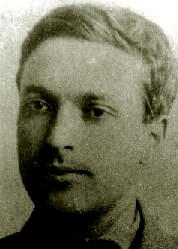 Soviet psychologist who developed Genetic approach to the development of concepts in early childhood and youth, tracing the transition through a series of stages of human development, based on the development of the child's social practice. His works were published after his death in 1934 and suppressed in 1936 and were not known in the West until 1958.
In his student days at the University of Moscow, he read widely in linguistics, sociology, psychology, philosophy and the arts. His systematic work in psychology did not begin until 1924. Ten years later he died of tuberculosis at the age of only 38. In that period, with the collaboration of Aleksandre Luria and A N Leontiev, he launched a series of investigations in developmental psychology, pedagogy and psychopathology. Vygotsky ran a medical practice in his native Byelorussia, actively participating in the development of the Revolution under atrocious conditions and almost total isolation from the West.
His most famous work is Thought and Language, published shortly after his death, developed for the first time a theory of language development which both anticipated Piaget's genetic psychology - describing the development of language and logical thinking in young children in the course of their interactions with adults and the world around them, interiorising the practical activity expressed in semsori-motor activity, via vocialisations, inner-speech and finally thought - and the development of theoretical, or conceptual knowledge in school-age children as their intuitive knowledge, acquired in their immediate life experiences, comes into active contact with socially transmitted knowledge of the teacher.
Equally renowned is The Crisis in Psychology, in which Vygotsky makes a systematic critique of all the currents and trends in European psychology of the day, including the dominant so-called Marxist psychology. In the Soviet Union of his times, Stalin fostered pseudo-scientific trends, such as Lysenko's theory of Inheritance of Acquired Characteristics, which used quotations from Marx and Engels or Lenin to support theoretical lines in science as if these were party-political questions which can resolved by reference to political doctrine.
Vygotsky was strongly influenced by Pavlov, the discoverer of the conditional reflex and leaned towards behaviourism, emphasising the requirement for science to adopt objective methods of investigation, in opposition to the introspective methods of Husserl, for example. Vygotsky did not live long enough to resolve the contradictions into which behaviourism is lead in coming to grips with the manifest reality of subjective consciousness.
His works were published after his death in 1934 and suppressed in 1936 and were not known in the West until 1958. More recently, linguists and educationalists influenced by Piaget's Genetic Psychology have been drawn towards Vygotsky's work, seeing in it a superior understanding of the relationship between the educator and the educated, in which the educator must "negotiate" with the child or student who is credited with an active role in the learning process. Especially in the United States, Vygotsky has found a following among Community Development workers who value his concept of a "Zone of Proximal Development", in which leadership is able to facilitate intellectual and social development in struggles by communities to change their circumstances, leading to a subsequent benefit in an all-round development of conceptual ability.
See Lev Vygotsky Archive and Marxism and Psychology Archive.